How an autonomous SOC works
Architecture overview
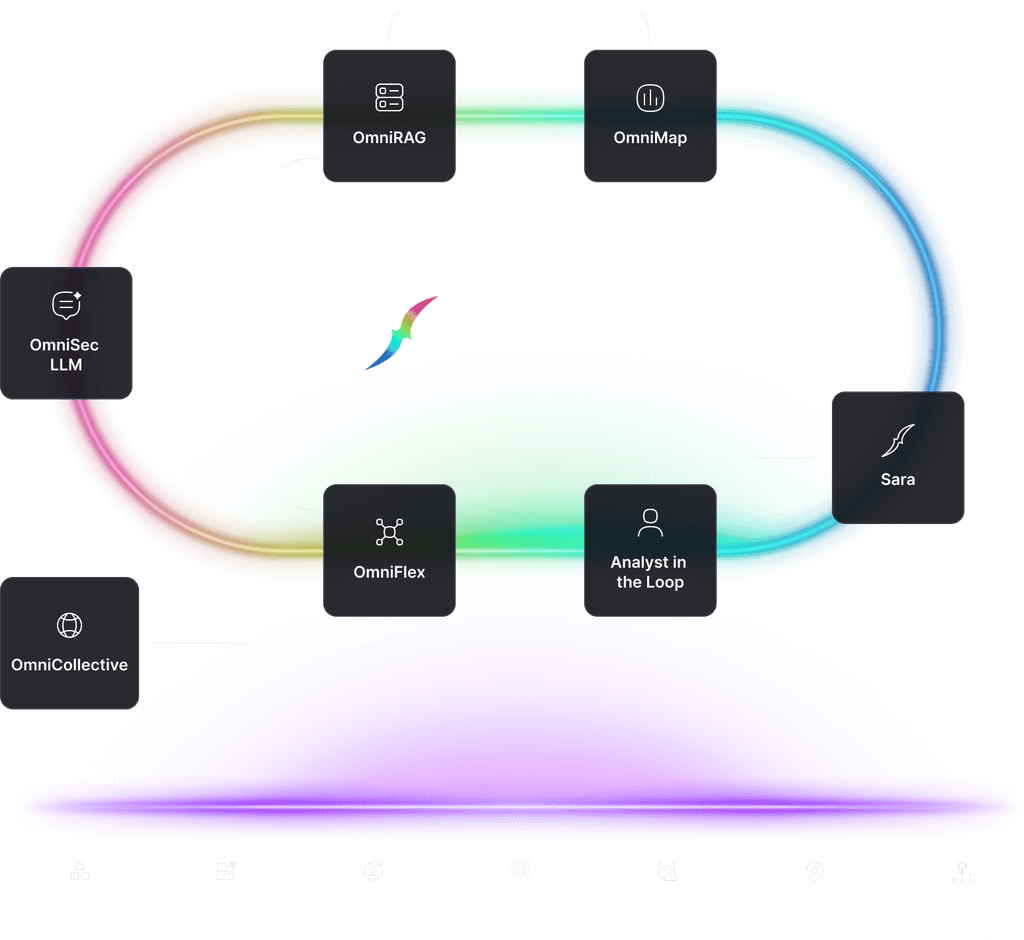
Six layers. One continuous loop.
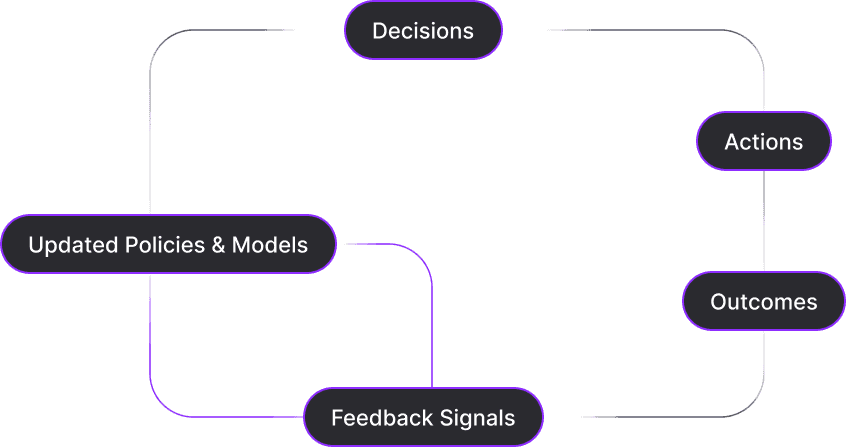
SIRP functions as a closed-loop Autonomous SOC built around six core layers. Every layer runs continuously as your environment changes.
Not per ticket. Not per alert. Evaluated as an evolving system state.
Signal Ingestion
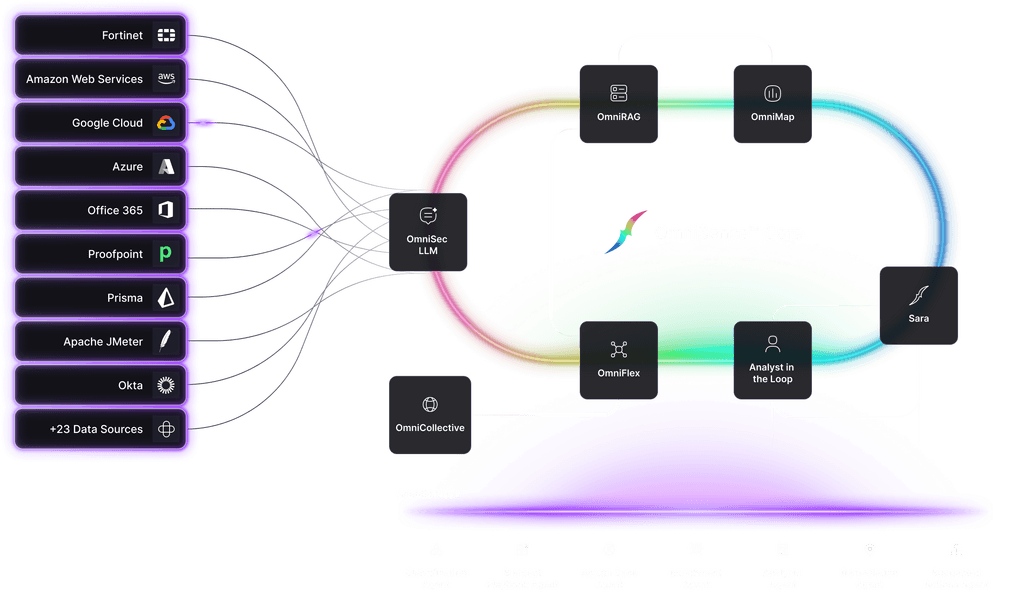
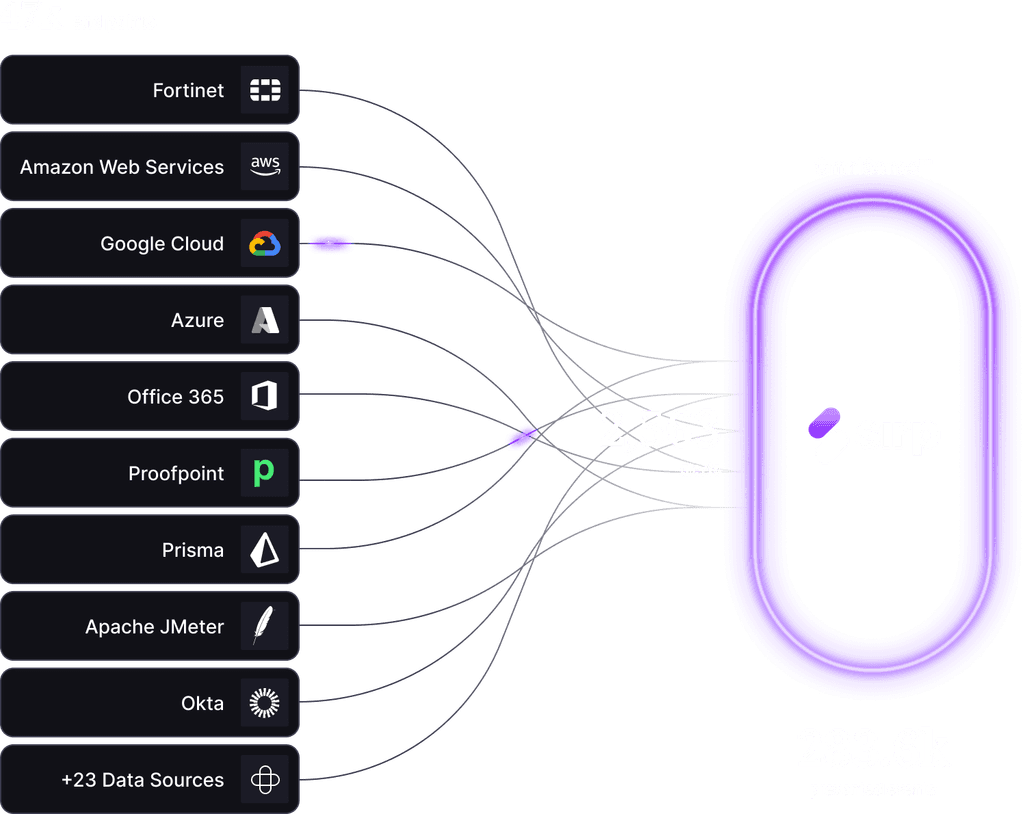
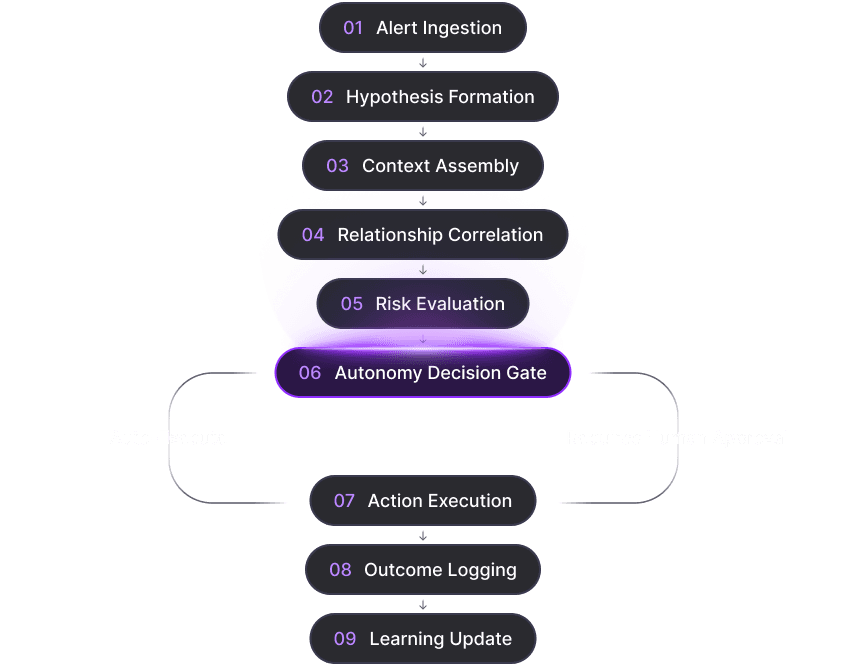
SIRP ingests telemetry from your entire stack: Identity providers, endpoints, cloud, network, SaaS, threat intel, and your existing SIEM/EDR/XDR. Every signal is normalized into structured entities. No blind spots. No filtered snapshots.
Relational Context
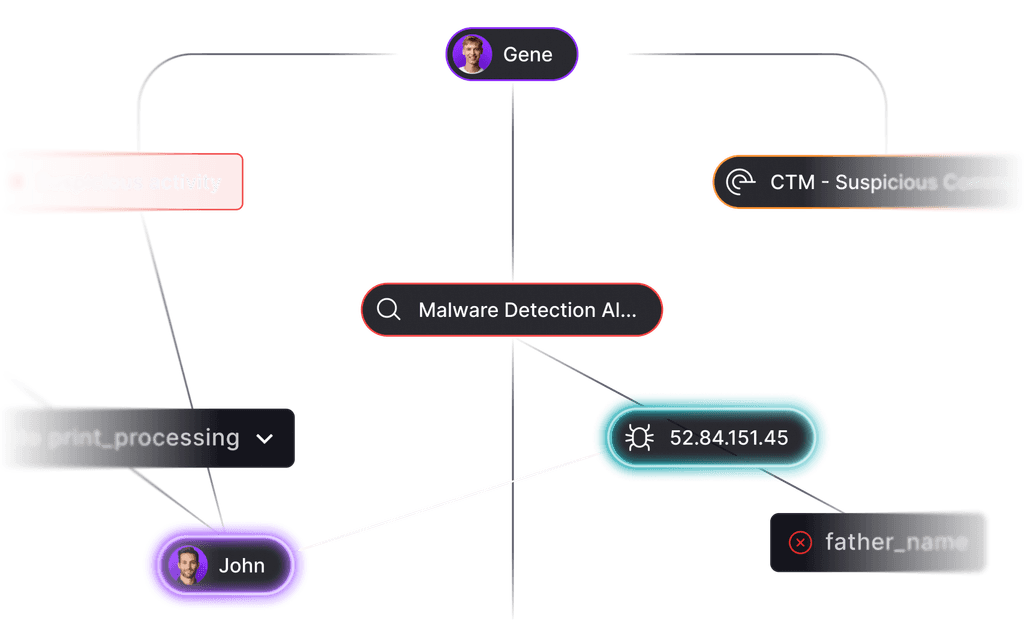
Most tools treat alerts as isolated events. Three signals, three tickets, zero connected thinking.
OmniMap maps the relationships between identities, devices, workloads, access paths, and historical incidents so SIRP can estimate blast radius and detect exposure paths before a human would even think to connect them.
Risk Evaluation & Reasoning
OmniSense continuously evaluates system state against behavioral baselines, threat intel, privilege levels, asset sensitivity, and OmniMap's relational context. For every event: a risk score, a confidence level, eligible actions, and a clear execution authorization.
It doesn't just flag what's bad. It decides what to do about it.
Policy Validation
Autonomy without governance is just chaos with better tooling. Every decision is validated against your policies permitted actions, risk thresholds, asset constraints, escalation rules.
Conditions met? It acts.
Conditions not met? It escalates.
No ambiguity.
Autonomous Execution
This is where most platforms stop and send you a Slack message. SIRP's Agentic Mesh executes: endpoint isolation, identity restriction, session termination, network containment, cloud workload isolation, the moment governance and confidence conditions are met.
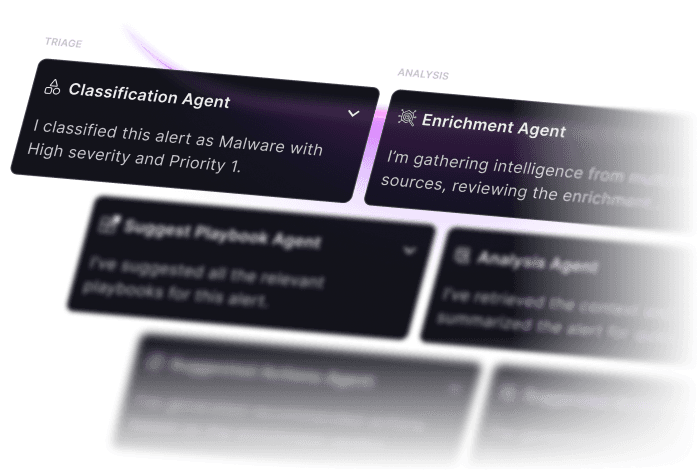
The agentic mesh in action
Decision Memory & Learning
Every decision is recorded: context, actors, actions, outcomes, analyst feedback. This memory feeds back into OmniSense, refining future risk evaluation continuously.
Static systems degrade. Learning systems compound.