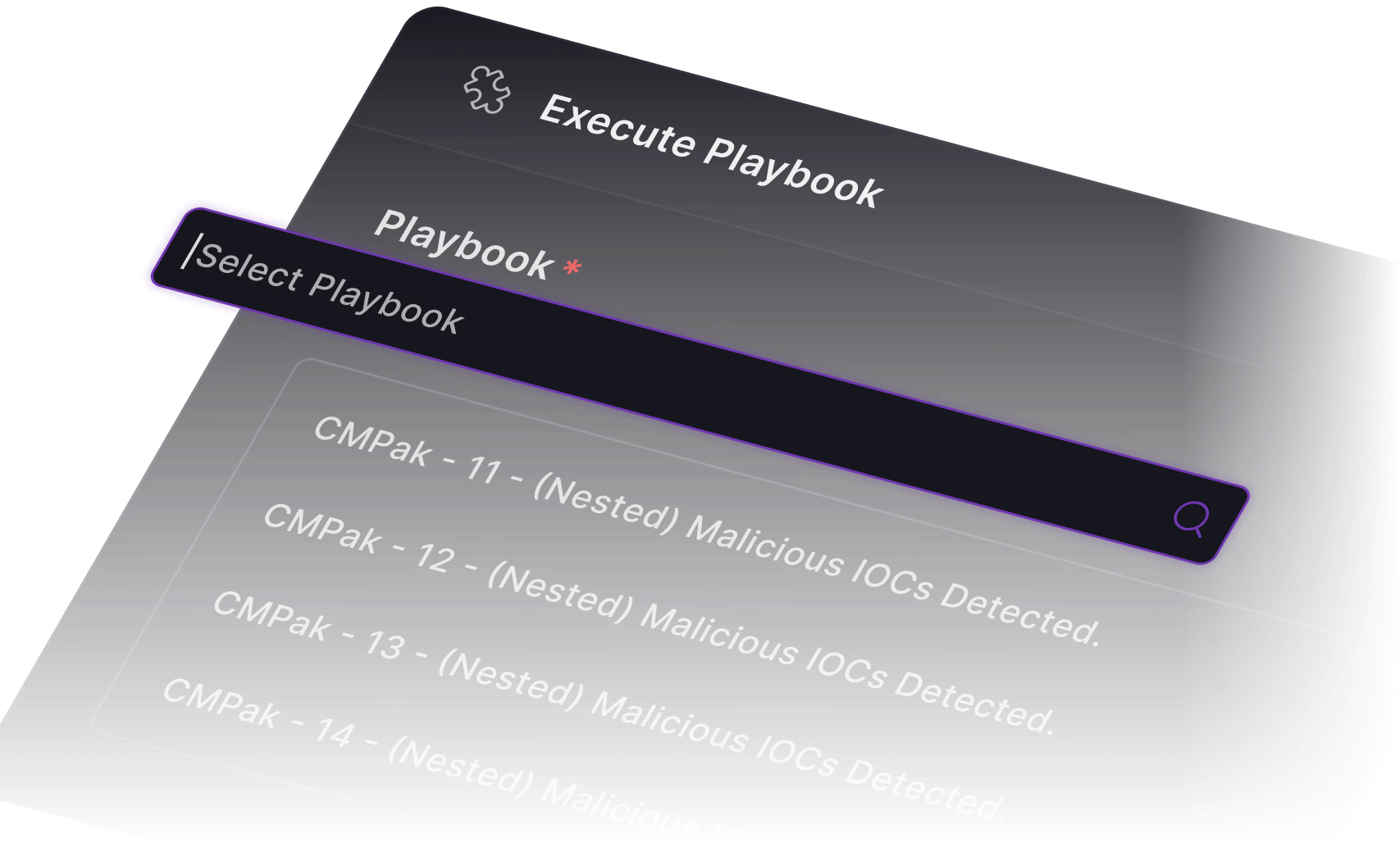
SOAR architecture:
- Event → Trigger → Playbook → Action
- Static branching logic
- Human approval checkpoints

SOAR platforms are designed to orchestrate tools and automate predefined workflows.
They typically:
SOAR reduces repetitive work by automating steps. However, it does not fundamentally change where decision authority resides. Analysts still review, validate, and execute most meaningful response actions.
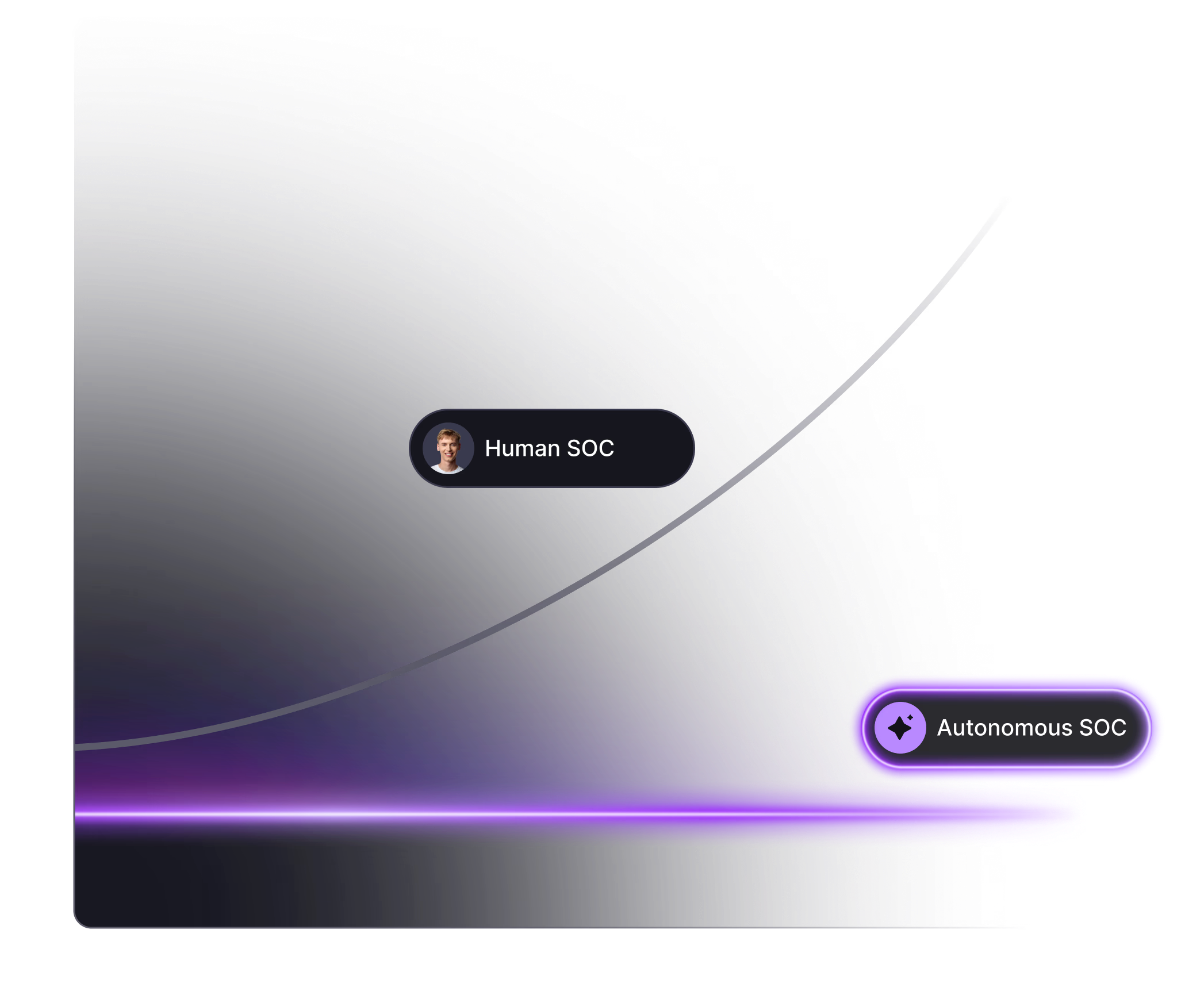
An Autonomous SOC is a security operations model in which AI systems independently analyze incidents, compute risk dynamically, and execute response actions within governance boundaries.
Rather than following static playbooks, an Autonomous SOC:
The shift is from task automation to decision ownership.
A SOAR playbook is a DAG walked from a single starting condition. The risk assessment that decided which branch to take happens at step one — the system doesn't re-run that assessment as new telemetry arrives mid-execution. If the incident's actual severity changes at step four, the playbook doesn't know; it just keeps walking the path it started on.
To keep false-positive rates tolerable, most consequential actions get a human-approval node in the graph. That's not a process failure, it's a necessary safety valve given the architecture — the system has no way to express confidence, so a human has to supply it manually at every high-stakes step. The latency isn't from slow analysts. It's from the system having no native way to say "I'm confident enough to act here."
Each new tool in the stack is a new set of playbook branches, new field mappings, new failure modes to handle when that tool's API changes. Coverage doesn't compound — it accumulates maintenance. This is why SOAR deployments plateau: each additional integration costs roughly the same as the last one to build and to keep working.
A closed incident's outcome doesn't change how the next similar alert is scored, unless a person manually edits a playbook or a detection rule in response. The system has no feedback loop from outcome back to decision logic. Judgment doesn't accumulate; only the playbook library does.
SOAR is workflow-centric.
Autonomous SOC is decision-centric.
SOAR automates steps.
Autonomous SOC computes and enforces outcomes.
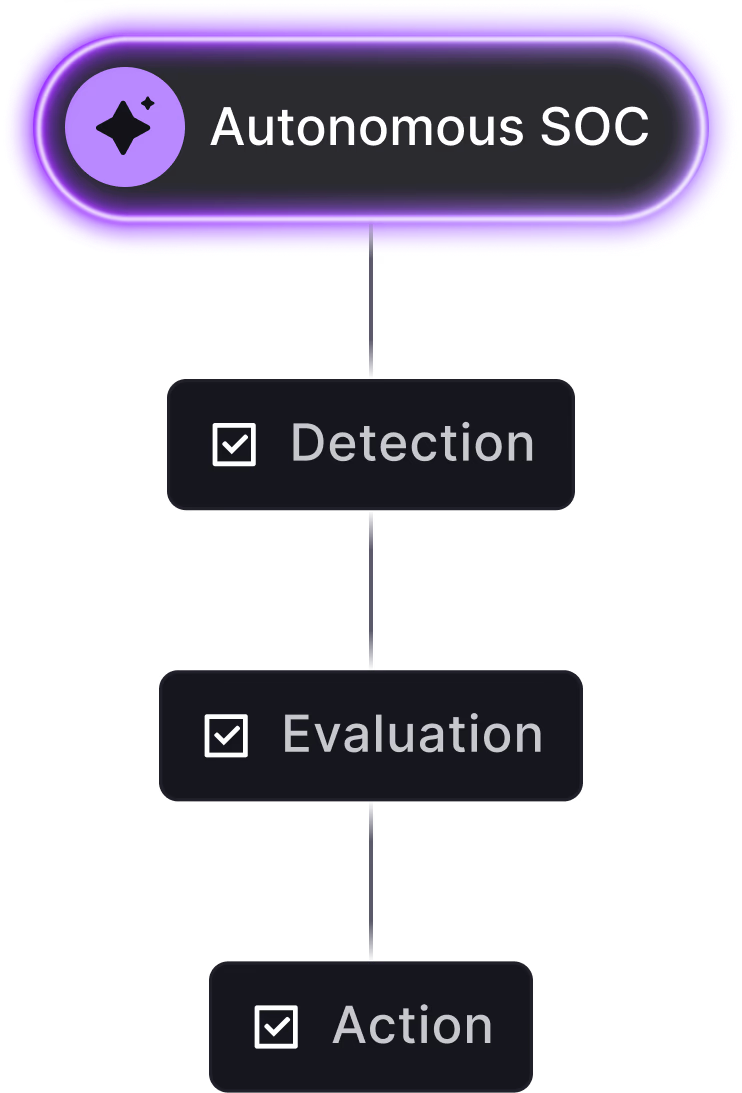
OmniSense splits decision-making into three layers instead of one monolithic workflow engine: the Planner continuously reassesses what an incident needs, the Executor carries out approved actions, and the Governor enforces policy on every step in between. Splitting them apart is what lets confidence and policy sit natively in the system instead of being bolted on as approval gates.
Sara hands a decision back to a human only when policy requires it or confidence falls below the governed threshold — with the reasoning that led there, not just a raw alert.
Risk is computed continuously from findings up through assets to the organization, so the same incident is re-scored as new context arrives instead of being scored once at trigger time. This is how confidence gets expressed natively rather than supplied manually at an approval gate.
Every decision captures the inputs it weighed, the policy check it passed, and the outcome it produced — a trail built for audit, not a log of which actions fired.
SOAR may be appropriate when:
In stable, low-complexity environments, workflow automation can provide efficiency gains.
An Autonomous SOC becomes necessary when:
In these environments, workflow orchestration becomes a bottleneck.
No.
Enhancing workflows with AI assistance does not change the underlying architecture.
Autonomous SOC replaces workflow-centric orchestration with a governed decision model in which risk computation, policy enforcement, and execution are embedded within the system.
It is not deeper automation.
It is a different operating model.
Transitioning from SOAR to Autonomous SOC does not require immediate replacement. Most organizations run Autonomous SOC alongside their existing SOAR and move specific containment classes over as confidence builds.
A phased approach may include: