SOAR vs Autonomous SOC:

What’s the Difference?


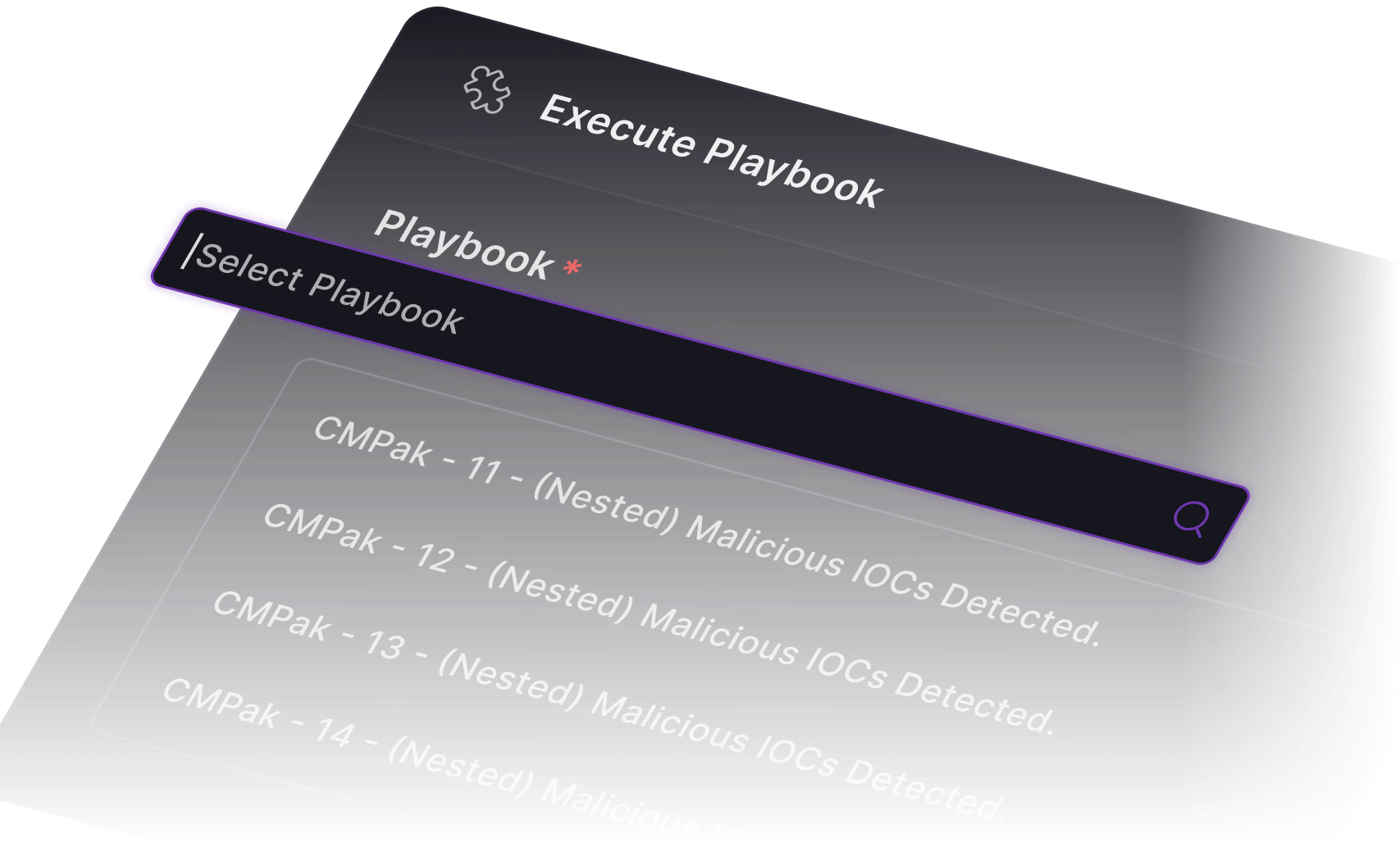
Security Orchestration, Automation, and Response (SOAR) platforms were introduced to reduce manual effort in security operations. They automate workflows, trigger playbooks, and coordinate tools across the SOC.

Autonomous SOC represents a different architectural model. To understand the core concept, see what an autonomous SOC is and how it changes security operations.

Instead of focusing primarily on workflow orchestration, an Autonomous SOC embeds decision logic, risk computation, and policy enforcement directly into the operating system of security operations.

This page explains how SOAR and Autonomous SOC differ — and where each model fits.

SOAR vs Autonomous SOC:

SOAR vs Autonomous SOC:

What’s the Difference?

What’s the Difference?


Security Orchestration, Automation, and Response (SOAR) platforms were introduced to reduce manual effort in security operations. They automate workflows, trigger playbooks, and coordinate tools across the SOC.

Autonomous SOC represents a different architectural model. To understand the core concept, see what an autonomous SOC is and how it changes security operations.

Instead of focusing primarily on workflow orchestration, an Autonomous SOC embeds decision logic, risk computation, and policy enforcement directly into the operating system of security operations.

This page explains how SOAR and Autonomous SOC differ — and where each model fits.


Security Orchestration, Automation, and Response (SOAR) platforms were introduced to reduce manual effort in security operations. They automate workflows, trigger playbooks, and coordinate tools across the SOC.

Autonomous SOC represents a different architectural model. To understand the core concept, see what an autonomous SOC is and how it changes security operations.

Instead of focusing primarily on workflow orchestration, an Autonomous SOC embeds decision logic, risk computation, and policy enforcement directly into the operating system of security operations.

This page explains how SOAR and Autonomous SOC differ — and where each model fits.

What Is SOAR?

SOAR platforms are designed to orchestrate tools and automate predefined workflows.


They typically:

Trigger playbooks when alerts are received

Execute branching logic based on rules

Integrate across SIEM, EDR, and ticketing systems

Require human validation for critical actions

SOAR reduces repetitive work by automating steps.

However, it does not fundamentally change where decision authority resides. Analysts still review, validate, and execute most meaningful response actions.

What Is an Autonomous SOC?

What Is an Autonomous SOC?

What Is an Autonomous SOC?

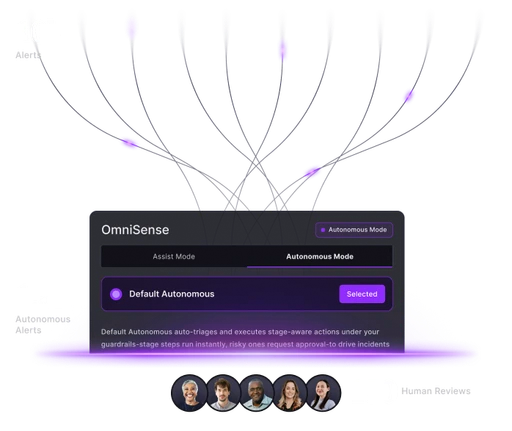
An Autonomous SOC is a security operations model in which AI systems independently analyze incidents, compute risk dynamically, and execute response actions within governance boundaries.


Rather than following static playbooks, an Autonomous SOC:

An Autonomous SOC is a security operations model in which AI systems independently analyze incidents, compute risk dynamically, and execute response actions within governance boundaries.

Rather than following static playbooks, an Autonomous SOC:

Continuously evaluates contextual state

Continuously evaluates contextual state

Computes risk in real time

Computes risk in real time

Selects response actions based on policy and confidence thresholds

Selects response actions based on policy and confidence thresholds

Executes without routing every decision through human queues

Executes without routing every decision through human queues

Learns from outcomes to improve future decisions

Learns from outcomes to improve future decisions

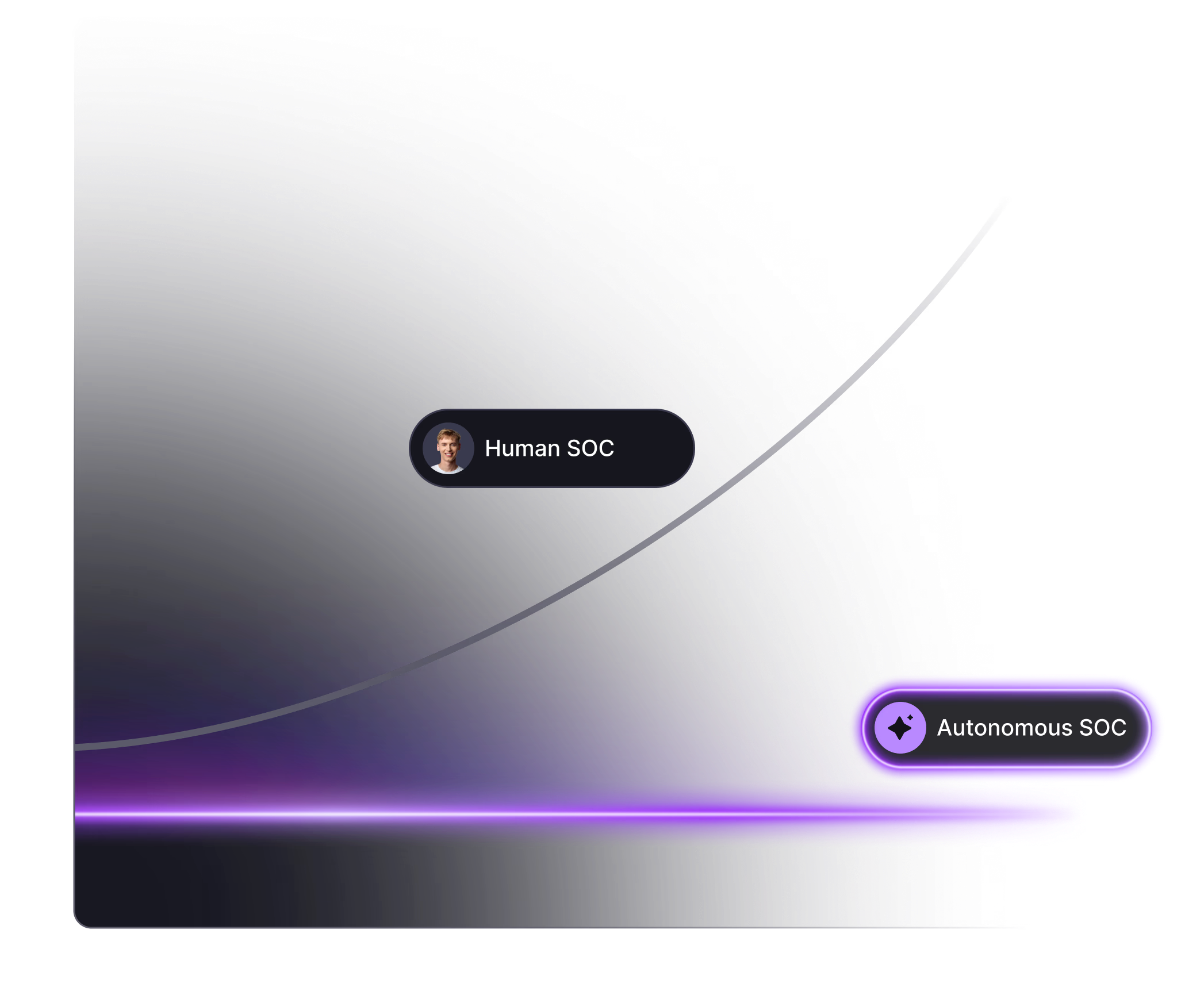
The shift is from task automation to decision ownership.

The shift is from task automation to decision ownership.

Architectural Difference

Architectural Difference

SOAR is workflow-centric.

Autonomous SOC is decision-centric.

SOAR is workflow-centric.

Autonomous SOC is decision-centric.

SOAR architecture:

SOAR architecture:

Event → Trigger → Playbook → Action

Static branching logic

Human approval checkpoints

Event → Trigger → Playbook → Action

Static branching logic

Human approval checkpoints

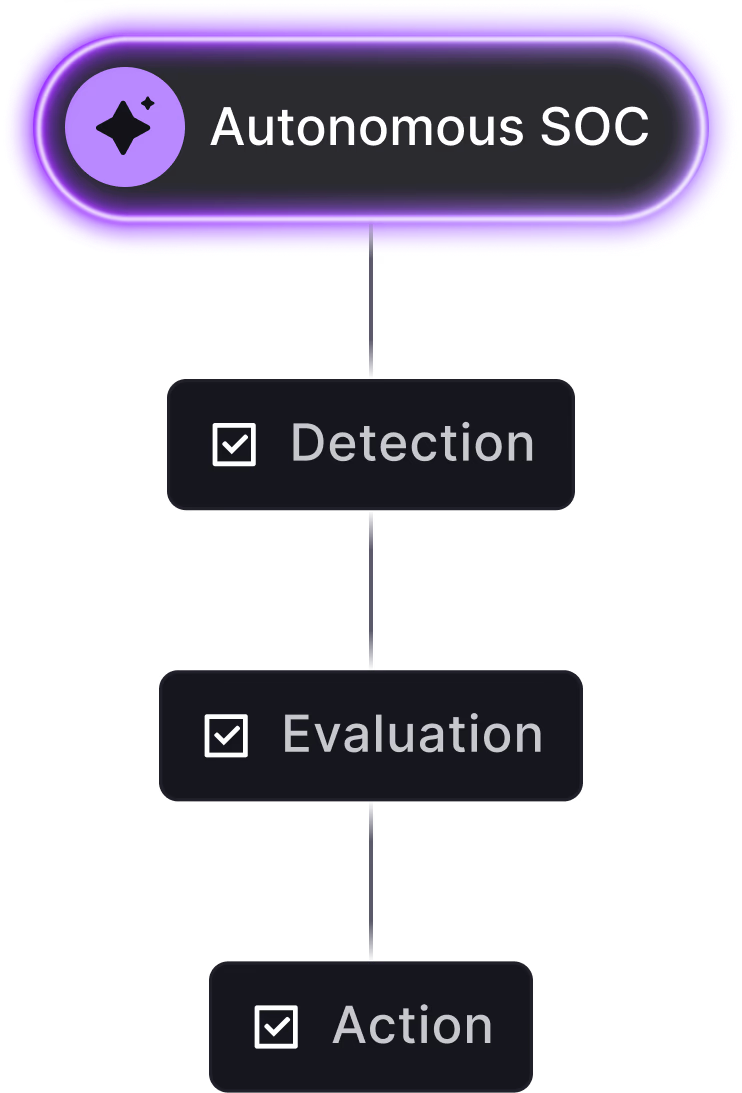
Autonomous SOC architecture:

Autonomous SOC architecture:

Continuous signal ingestion

Context construction across identities, endpoints, and behavior

Real-time risk computation

Policy-bound execution

Embedded learning loop

Continuous signal ingestion

Context construction across identities, endpoints, and behavior

Real-time risk computation

Policy-bound execution

Embedded learning loop

This decision pipeline is explained in detail in how autonomous SOC works at the system level.

One coordinates actions.

The other governs decisions.

This decision pipeline is explained in detail in how autonomous SOC works at the system level.

One coordinates actions.

The other governs decisions.

SOAR vs Autonomous SOC Comparison

SOAR vs Autonomous SOC Comparison

Capability

Capability

Core Model

Logic Type

Human Dependency

Learning

Context Awareness

Execution

Governance

Core Model

Logic Type

Human Dependency

Learning

Context Awareness

Execution

Governance

SOAR

SOAR

Workflow orchestration

Rule-based branching

High for validation

Manual tuning

Playbook-scoped

Playbook-driven

External controls

Workflow orchestration

Rule-based branching

High for validation

Manual tuning

Playbook-scoped

Playbook-driven

External controls

Autonomous SOC

Autonomous SOC

Decision system

Dynamic risk computation

Policy-bound autonomy

Embedded reinforcement learning

State-aware across domains

Confidence-gated enforcement

Embedded policy model

Decision system

Dynamic risk computation

Policy-bound autonomy

Embedded reinforcement learning

State-aware across domains

Confidence-gated enforcement

Embedded policy model

SOAR automates steps.

Autonomous SOC computes and enforces outcomes.

SOAR automates steps.

Autonomous SOC computes and enforces outcomes.

When SOAR Is Sufficient

When SOAR Is Sufficient

SOAR may be appropriate when:

  • Automation is limited to enrichment workflows

  • Incident volume is manageable

  • Human triage remains primary

  • Risk tolerance requires strict manual approval

In stable, low-complexity environments, workflow automation can provide efficiency gains.

SOAR may be appropriate when:

  • Automation is limited to enrichment workflows

  • Incident volume is manageable

  • Human triage remains primary

  • Risk tolerance requires strict manual approval

In stable, low-complexity environments, workflow automation can provide efficiency gains.

When Autonomous SOC Is Needed

When Autonomous SOC Is Needed

An Autonomous SOC becomes necessary when:

  • Incident velocity exceeds human routing capacity

  • Cross-domain attacks require dynamic context interpretation

  • Response latency directly increases business risk

  • Security outcomes vary by analyst experience

  • Continuous learning is required to improve containment effectiveness

In these environments, workflow orchestration becomes a bottleneck.

An Autonomous SOC becomes necessary when:

  • Incident velocity exceeds human routing capacity

  • Cross-domain attacks require dynamic context interpretation

  • Response latency directly increases business risk

  • Security outcomes vary by analyst experience

  • Continuous learning is required to improve containment effectiveness

In these environments, workflow orchestration becomes a bottleneck.

Is Autonomous SOC Just “Next-Generation SOAR”?

Is Autonomous SOC Just “Next-Generation SOAR”?

No.

Enhancing workflows with AI assistance does not change the underlying architecture.

Autonomous SOC replaces workflow-centric orchestration with a governed decision model in which risk computation, policy enforcement, and execution are embedded within the system.

It is not deeper automation.

It is a different operating model.

No.

Enhancing workflows with AI assistance does not change the underlying architecture.

Autonomous SOC replaces workflow-centric orchestration with a governed decision model in which risk computation, policy enforcement, and execution are embedded within the system.

It is not deeper automation.

It is a different operating model.

Migration Considerations

Migration Considerations

Transitioning from SOAR to Autonomous SOC does not require immediate replacement. Most organizations replace workflow-centric automation with SOAR alternatives built for autonomous response.

A phased approach may include:

Transitioning from SOAR to Autonomous SOC does not require immediate replacement. Most organizations replace workflow-centric automation with SOAR alternatives built for autonomous response.

A phased approach may include:

Deploying Autonomous SOC alongside existing SOAR

Deploying Autonomous SOC alongside existing SOAR

Defining execution boundaries and policy thresholds

Defining execution boundaries and policy thresholds

Moving repetitive containment classes into autonomous execution

Moving repetitive containment classes into autonomous execution

Gradually reducing human gating as confidence matures

Gradually reducing human gating as confidence matures

The objective is not eliminating analysts.

It is relocating human effort from routing work to defining governance.

The objective is not eliminating analysts.

It is relocating human effort from routing work to defining governance.

Architecture Determines Authority

Architecture Determines Authority

SOAR introduced automation into the SOC.

Autonomous SOC introduces governed decision systems.

If your security operations still rely on inbox routing, workflow tuning, and manual validation for meaningful response, the limitation may not be automation depth — but architectural design.

Autonomous SOC represents the next evolution in security operations.


SOAR introduced automation into the SOC.

Autonomous SOC introduces governed decision systems.

If your security operations still rely on inbox routing, workflow tuning, and manual validation for meaningful response, the limitation may not be automation depth — but architectural design.

Autonomous SOC represents the next evolution in security operations.


Watch your Autonomous SOC drive itself

Watch your Autonomous SOC drive itself

Watch your Autonomous SOC drive itself

Self-driving SOC — governed, AI-native security operations.
Powered by OmniSense™

© 2026 SIRP Labs Inc. All Rights Reserved.

Self-driving SOC — governed, AI-native security operations.
Powered by OmniSense™

© 2026 SIRP Labs Inc. All Rights Reserved.

Self-driving SOC — governed, AI-native security operations.
Powered by OmniSense™

United States

7735 Old Georgetown Rd,
Suite 510, Bethesda, MD 20814

+1 888 701 9252

United Kingdom

167-169 Great Portland Street,
5th Floor, London, W1W 5PF

© 2026 SIRP Labs Inc. All Rights Reserved.